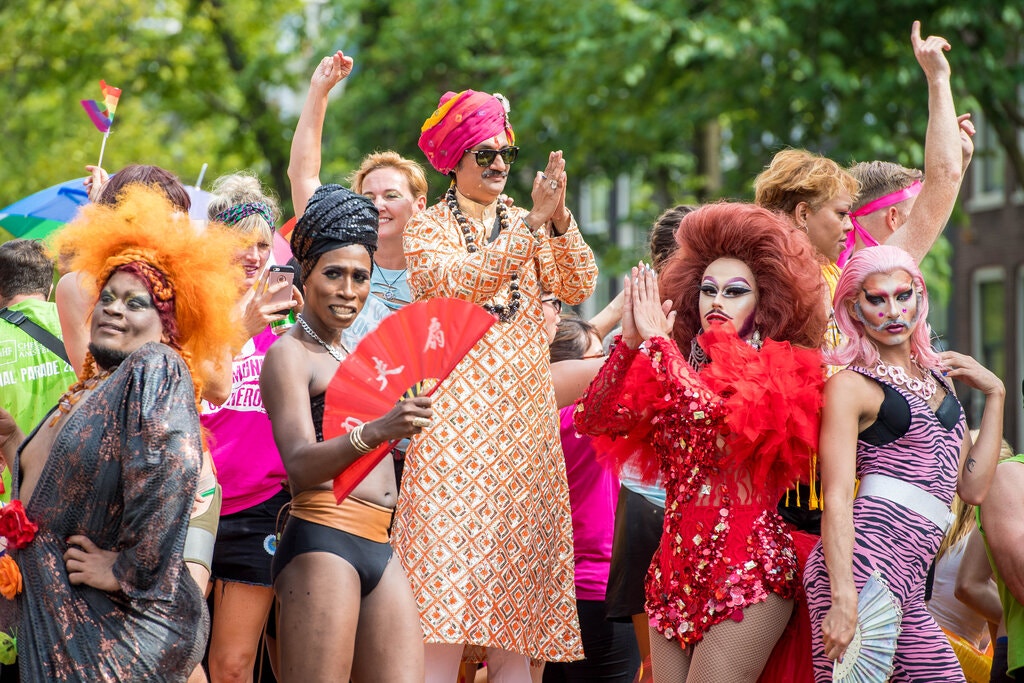
Barry Bollywood
Few people knew it at the time, but Gaston was just one of many young leaders who had been recruited & trained to represent the Reptile Club – an elite group of powerful people who had big ideas about how the future should look for the little people of the world.
He was assigned a mentor – a wise old man who had accidentally worked for the Nazis in World War Two. George, or Emperor Palpatine to his friends, had a lot of money and was looking at spending it on creating the perfect society. Gaston was only too happy to help – he loved big ideas. He also liked the idea of ruling without other people getting in the way with boring stuff like representation.
Gaston’s policy miracles were getting bigger and more sophisticated, and as they did they became more expensive – $2 billion for this; several billion for that; $3 billion to design a new flag for Sudan; $5 billion in pregnancy kits for Afghanistan, and $30 billion in gender neutral artillery shells for Khazaria which was acting as a launderette for the Reptile Club.
In order to pay for all these feats of policy Gaston had to take more and more money from the people by raising taxes. He taxed the people of Peopleland when they earned money; he taxed them when they spent money, and then he taxed them for simply being alive. He called this The Carbon Tax – a tax on anything made out of carbon – people, plants, pets etc. If it moved or breathed, it paid tax to Gaston.
Soon Gaston was taking more from his people than the feudal lords of medieval Europe had taken from their subjects. He taxed them so heavily in order to fund his noble & virtuous projects that he had to instruct his royal state media to ban the use of the word ‘feudal’, and label anyone who continued to use the term a ‘Nazi’.
To keep the illusion of his policy miracles flowing, Gaston was forced to divide the people of Peopleland into those who were ‘good’ and those who were ‘bad’. It was quite simple really: those who were good supported his policies, and those that did not were bad.
He told his state funded media and police – the Royal Police of Incredible Justice – as he had declared them, to start looking for people who were not willing to repeat the lie of his magic and did not share his view of the perfect society. Royal state media then branded these people ‘White Supremacists’.
About this time rumours started circulating that Gaston’s real father was not Pierre the Bastard, but in fact the communist revolutionary, Marco Cubano – the leader of the cane sugar republic of Muy Povertino. Cubano was an even bigger bastard than Pierre the Bastard, and Gaston’s mother was well known for both her anarchic libido and penchant for pantomime villains.
It also emerged that whilst Gaston had been at Clown school in Montreal teaching children how to light farts, that he’d also been unofficially instructing young women in the art of lovemaking. However, it turns out that Gaston had not checked all their I.D’s carefully enough, and at least one of them had been a child. Ooops! Gaston had paid the family $2 million not to mention it again.
Then just as the dust was settling on these scandals, and less than a year after he had banned black boot polish for being ‘racist’, videos emerged of Gaston as a child covered in boot polish singing the Al Jolson classic ‘Mammy’.
It transpires that even as a young child Gaston could not be left alone with boot polish. He had told his mother that he identified as Saladin – the destroyer of Christendom. To which she had replied ‘That’s nice dear’. Little did she know that as Imperial Emperor, Gaston would spread lies about dead native children that would result in the burning down of 95 churches.
Any one of these scandals would have ended the career of Brian the Boring I, II or even III, but Gaston was special. The old rules did not apply to him because in the new Trans-Islamic Republic of Peopleland, the Royal state media, the police and the judges all served the emperor rather than the people. The Royal state media did not mention these scandals, and if they were forced to, they made excuses for Gaston; the Royal Police of Incredible Justice pretended they were busy tackling transphobia, whilst all the judges said they were having lunch at the time – paid for by Gaston of course.
However, despite all this institutional support, the people were now slowly starting to see through Gaston’s sophistry, and some even started booing him when he appeared on the palace balcony to wave at the people. For each one of those who dared to boo him, there were another ten who had grown tired of Gaston’s high tax reign. Gaston had the royal state media brand anyone who dared boo him as ‘Transphobic’.
In the next election Gaston narrowly secured power, and had to seek another party who enjoyed an equally loose relationship with reality in order to form a coalition.
Barry Bollywood – the leader of the Diet-Soviet Party and former Punjabi Ken Doll was the obvious choice. His party sang the same songs of inclusive diversity that Gaston’s party sang, and like Gaston, he also lived in a world where money wasn’t real and actions did not have consequences.
In many ways Barry Bollywood was worse that Gaston. Gaston was a petulant boy king who would throw tantrums at the people and have them thrown in prison when they didn’t love him enough, but Bollywood was a cynical grifter and a fraud. He employed political opportunism to increase his power and wealth whilst pretending to care about the poor people who supported him. He drove expensive sports cars, wore expensive watches, and his wife danced around in Tik-Tok videos wearing gold jewellery whilst the victims of Gaston’s policies lined up for food in the snow.
But as far as Gaston was concerned, Barry Bollywood and his Diet-Soviet Party would re-legitimize Gaston’s waning rule and allow him to continue being divine Imperial Emperor.
Gaston had a meeting with Bollywood in the gold room of the palace, and over a Rolex catalogue asked him what it would take to secure the support of his party. Bollywood told Gaston that all he was looking for was free toothbrushes for everyone in The Trans-Islamic Republic of Peopleland… and maybe a Rolex for his trouble.
‘Free toothbrushes?’ Gaston asked, his voice almost breaking in excitement and disbelief. ‘Free toothbrushes in return for supreme power you say?’ Gaston could not believe his luck. It was like doing business with a child – he felt like the first Conquistador to land in Peru; trading sacks of gold in return for cheap glass beads. Bollywood may have been a cynical political operative, but he clearly had no understanding of the power he had, nor how negotiations worked, and as Gaston noted, was easily distracted by shiny objects.
Despite this imbalance, Gaston and Bollywood enjoyed a bromance of political opportunism – they were like a couple of Siamese twins conjoined by poor policies and economic illiteracy – neither could rule without the other. Gaston proposed even higher taxes and Barry Bollywood’s Diet Soviet Party rubber stamped it just as long as it made the people more dependent on the state.
Both knew that this model was unsustainable long term unless they could somehow enslave the people fully and convince them that it was in their best interests. Then, as if by magic, in the winter of the following year in a far off land came the opportunity the Reptile Club and their young leaders so desperately sought.
 Aristotle's Bench Press